
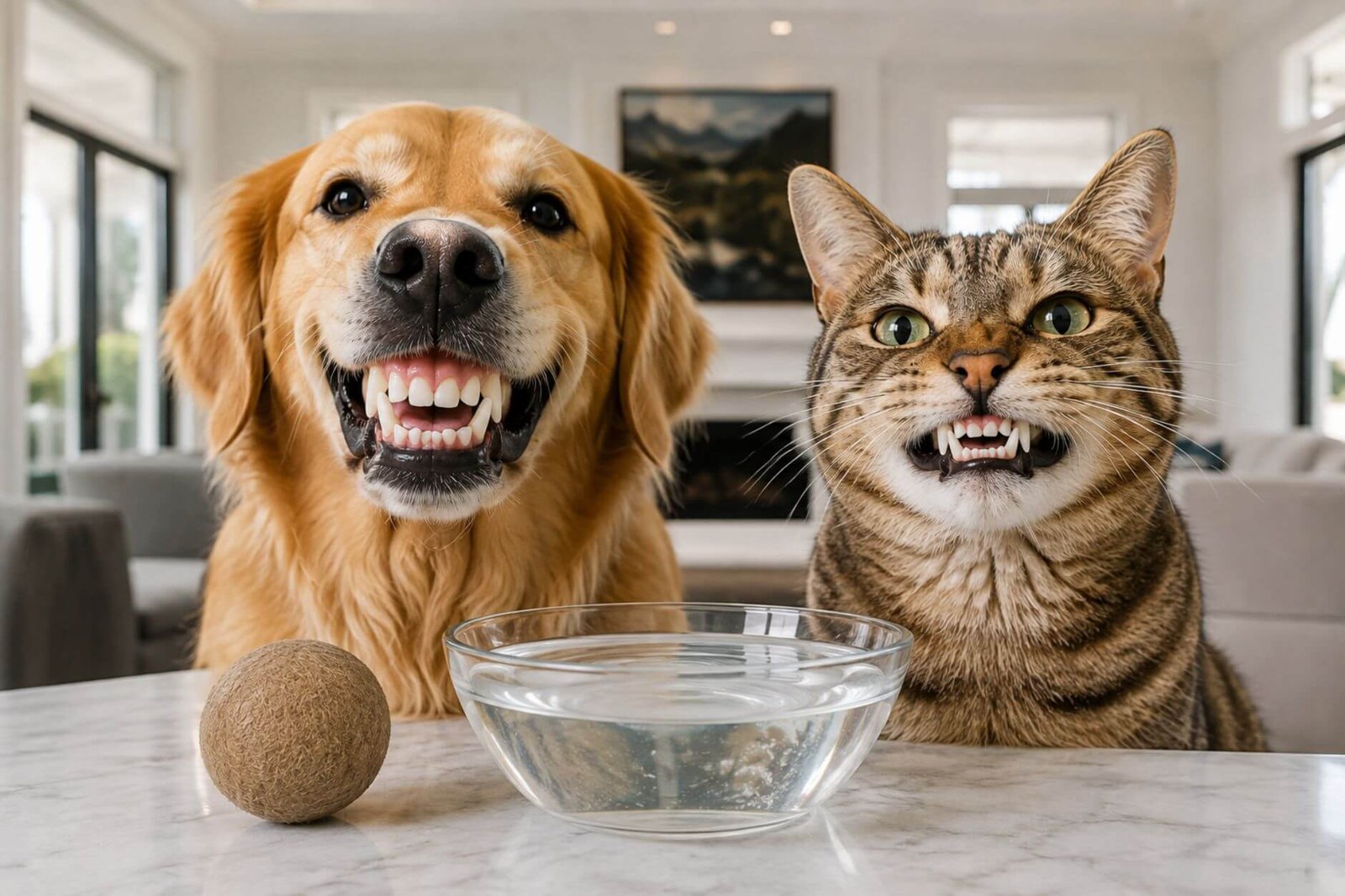
Mornings with my dog feel easy now. Fresh breath. Clean teeth. Calm vet visits, finally! That peace came from Bee Clear™ Dental Hygiene for Dogs and Cats.
But before this dental hygiene, things were rough. I leaned in for a scratch and her breath stopped me cold.
I brushed it off at first. Then she started chewing on one side only. Then a yellow film showed along her teeth.
I have seen dogs go through painful extractions and it broke my heart. I did not want a checkup to confirm what I already feared. So I asked around first.
A friend mentioned Bee Clear Dental Hygiene and I was curious. She had used it on her own dog for months. I talked to other owners too and read reviews before trying it myself.
Three weeks after starting Bee Clear, the yellow film had faded, just like that! What a relief when the vet said her teeth looked clean.
The Slow Problem Most Pet Owners Don’t Catch Early
Nobody wakes up thinking about their pet’s teeth. Life gets busy. Walks happen. Meals happen. Teeth just sit there in the background, until one day they don’t.
That’s the tricky part about dental problems. They don’t show up all at once. A little bad breath here. A little extra chewing there.
Easy to miss, easy to explain away, until a vet points at something and says it’s been building for months.
I talked to a lot of pet owners while writing this and almost everyone had a version of the same story.
They noticed something small. They told themselves it was nothing. Then a checkup revealed how much had actually changed underneath.
Let’s notice what to watch for, based on what vets flag most often.
| Warning Sign | What This Signals |
| Bad breath | Bacteria buildup in the mouth |
| Yellow film on teeth | Early plaque formation |
| Brown crust near gums | Hardened tartar |
| Red or swollen gums | Gum inflammation |
| Pawing at the mouth | Pain or discomfort |
| Dropping food while eating | Sore or loose teeth |
None of these shows up overnight. They build slowly, quietly, over weeks and months.
Your pet can’t point to their mouth and tell you something hurts. They just chew a little differently, or go a little quieter around mealtime. Still, most owners chalk it up to nothing.
That’s exactly why daily dental care matters so much. It’s not about fixing a big problem later.
It’s about catching the small signs early, before they turn into something painful and expensive.
What Bee Clear™ Dental Hygiene Does Inside the Bowl
Here’s the part I found hardest to believe at first. This isn’t a toothpaste. It isn’t a chew. It’s just water, with a few drops added, sitting in the same bowl your dog already drinks from every day.
No fighting. No forcing her mouth open. No holding her still while she squirms away. She just drinks like she always does and the work happens on its own.
I wanted to understand how something this simple could actually help. So I looked into what’s going on inside that bowl.
It turns out the formula handles two jobs at once, working from two different angles instead of just one.
Bee Clear™ Dental Hygiene for Dogs and Cats works as a two-part system inside your pet’s water bowl.
| Action | What Happens |
| Step One | Breaks down existing plaque and bacteria on the teeth |
| Step Two | Builds a protective layer to block new buildup |
| Bonus Effect | Supports balanced pH inside the mouth |
| Bonus Effect | Freshens breath naturally |
That combination matters more than it might seem at first glance. Cleaning up existing plaque helps right now.
Blocking new buildup protects tomorrow. Most routines only handle one side of that equation.
They brush away today’s mess. But they do little to stop tomorrow’s mess from forming.
The ingredients behind it lean toward the natural side rather than the harsh. Bee propolis extract sits at the center of the formula, alongside yucca extract and a gentle blend of supporting ingredients.
Nothing here is meant to overpower your pet’s senses either. It carries no added flavor. So even the pickiest drinkers accept it without a second thought.
A Closer Look at the Formula
I’ll admit something. Before trying this, I read the ingredient list twice. Anything going into my dog’s water every single day deserved that much attention from me.
What I found actually put me at ease. No long chemical names I couldn’t pronounce.
No vague “proprietary blend” hiding what’s really in the bottle. Just a short list of ingredients, each one doing a clear job.
Transparency matters when something goes into your pet’s water every day. Let’s see what makes up the formula.
| Ingredient | Role |
| Distilled water | Base carrier |
| Yucca schidigera extract | Supports oral comfort |
| Bee propolis extract | Core plaque-fighting ingredient |
| Radish root ferment filtrate | Natural preservative |
| Glucose oxidase | Supports enzyme balance |
| Vitamin C | Antioxidant support |
| Citric acid | pH balance |
| Potassium sorbate | Preservative |
Bee propolis does the heavy lifting here, going after plaque directly. Everything else supports it quietly in the background, from comfort to preservation to keeping the pH where it should be.
What stood out most to me was what wasn’t on this list. Nothing on it requires a prescription. Nothing demands a vet visit before you start.
I didn’t need to call anyone. I didn’t need to wait for approval. I just opened the bottle and started using it.
That simplicity made the whole thing feel far less intimidating than I expected. It’s probably why so many pet owners stick with it long after the first bottle runs out.
How to Use Bee Clear™ Dental Hygiene the Right Way
This part worried me more than it should have. I kept picturing myself measuring drops with shaky hands, getting the math wrong, second-guessing every refill.
It turned out to be nothing like that. The dosing bends around your pet, not the other way around.
A small cat needs less. A large dog needs more. There’s no single number to memorize, just a simple range based on size.
Dosing stays flexible based on your pet’s size and how much water they drink.
| Pet Situation | Drops Per Day |
| New to the product | 1 to 2 drops |
| Small pets, regular use | 4 to 6 drops |
| Larger dogs, regular use | 6 to 10 drops |
| Maximum daily limit | 20 drops |
I started low, the way most people do the first week, just to see how she took to it. Once I knew she drank it without any fuss, I moved up to a regular daily amount and stopped thinking about it much after that.
A few small habits make the routine work better. Shake the bottle well before each use, since the ingredients can settle. Mix fresh water with the additive and use it within 24 hours, rather than letting it sit for days. And one detail I learned the hard way.
This additive doesn’t work well in pet water fountains. Stick to a still bowl, the same one your pet already drinks from.
How to Build a Full Routine Around Daily Care
Dental care for pets works best as a layered habit, not a single fix. Think of it the way you think about your own oral care. You don’t rely on mouthwash alone. You brush, floss and rinse together.
Let’s meet a simple weekly plan many pet owners follow.
| Frequency | Habit |
| Daily | Water additive in every bowl refill |
| Daily | One dental treat or chew |
| Once or twice a week | Brushing with pet-safe toothpaste |
| Monthly | Quick gum and breath check at home |
| Yearly | Full dental exam at the vet |
Notice where the water additive sits. Right in the daily column. It asks for almost nothing. Yet it covers the gap between brushing sessions, which most pets never get every single day anyway.
45 Years of Siamese, One New Habit
I met a woman last spring who has raised Siamese cats for over 45 years. She told me this breed fights plaque harder than most.
At her cat’s checkup around age four, the vet spotted early gum irritation. Nothing serious yet. Just a clear warning.
Instead of waiting for a full cleaning, she tried something new. She added Bee Clear™ Dental Hygiene for Dogs and Cats to her cat’s water bowl every day. No brushing fights. No forcing pills. Just fresh water with a few drops mixed in.
Within a few weeks, the plaque along the gum line looked lighter. Her cat’s breath smelled fresher too.
She still keeps up with yearly vet visits. But she says the daily habit made those visits far less stressful.
The Bad Breath That Wouldn’t Quit
A dog owner I met at the park shared a similar story. His Labrador mix loved treats but hated the toothbrush.
Every walk ended with the same complaint from his kids. Bad breath, up close, every single time.
He started mixing the same water additive into his dog’s bowl before every refill. He didn’t change anything else about his routine.
Three weeks later, his vet mentioned noticeably less tartar during a checkup. He didn’t expect such a small habit to matter that much.
Stories like these repeat once you start asking pet owners about their routines. A small daily step, kept consistent, adds up fast.
When Genetics Play a Bigger Role
Not every pet starts from the same place. I spoke with someone who has adopted many rescue cats over the years. Some of her cats never lost a single tooth. Others lost several by midlife.
She said genetics play a big part, especially with strays who arrive already carrying years of decay.
She leans on her vet for guidance, including full bloodwork before scheduling any dental cleaning.
She added a water additive to her routine too, alongside her vet’s plan and noticed steadier results between checkups.
This matches what most vets say. No product replaces professional care. But daily habits support whatever plan your vet sets for your pet.
Why Vet Visits Still Come First
Nothing here replaces a checkup. Your vet spots things you and I never could. Loose teeth. Hidden infections.
Bone changes under the gum line. A yearly exam catches problems early, before they turn into painful, costly emergencies.
Daily care and vet visits work as a team. One handles everyday maintenance. The other catches what needs professional attention.
Bee ClearTM Dental Hygiene fits into that first role well, supporting your pet between checkups instead of replacing them.
General Guidelines for Long-Term Oral Health
Save this checklist for quick reference.
- Brush your pet’s teeth once or twice a week with pet-safe toothpaste.
- Add a water-based dental additive to every bowl refill, daily.
- Offer dental chews or treats made for oral support.
- Watch for warning signs like bad breath, drooling, or pawing at the mouth.
- Book a yearly vet exam and follow through on recommended cleanings.
- Remember that genetics affect dental health, especially in rescued or older pets.
- Stay patient. Meaningful change takes weeks, not days.
Final Thoughts
Your pet can’t tell you when their gums hurt. They can’t ask for fresher breath or explain why chewing feels different lately. That responsibility falls on you.
I think back to that morning with my dog often. A small, easy-to-miss sign led me to a habit that changed his checkups completely.
The stories above share that same thread. A small daily habit, repeated without fail, changed the outcome for each pet.
Dental hygiene for dogs and cats doesn’t need to be complicated or stressful. Adding Bee Clear™ Dental Hygiene to the daily water bowl takes seconds.
Indeed, it builds toward cleaner teeth, fresher breath and calmer vet visits over time. So, start today. Fill the bowl. Add the drops. Let your pet do the rest.